
Guides
At Home Skincare Devices and What Each One Actually Does
Nov
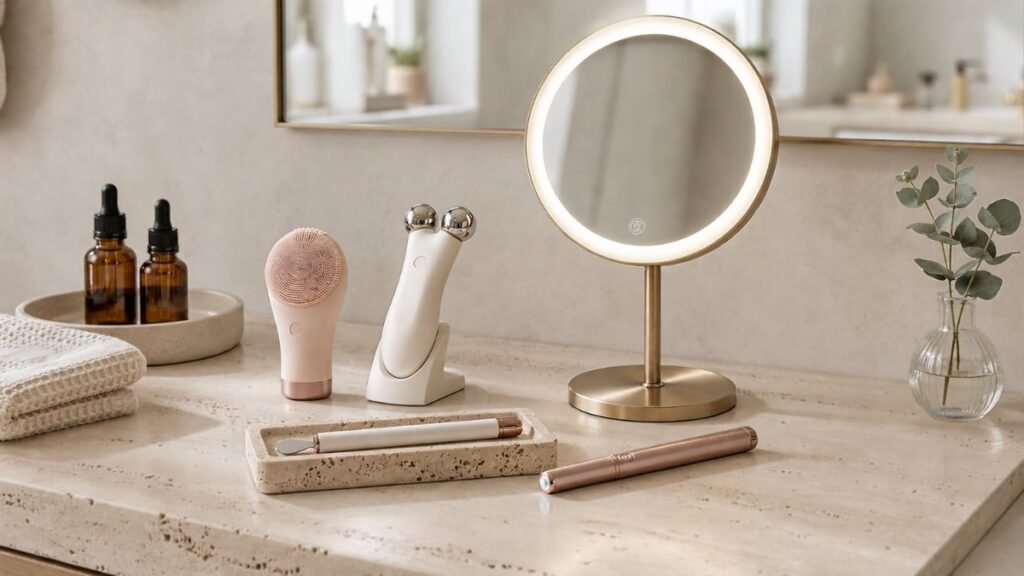
There are four device categories worth knowing, and each one does a different job. Cleansing brushes clean more thoroughly than hands. Red light wands and photon devices deliver light to the skin. EMS devices use low-level electrical current on the facial muscles. And microcurrent-style massagers mainly move fluid, which is why the effect shows up fastest around the eyes. Buying the wrong one is usually not a quality problem, it is a mismatch between the device and the thing you wanted fixed.
These sell hardest in the weeks before the holidays for an obvious reason. Salon and spa visits are the first thing to go when money is tight, and a device you own is a one-time cost against an appointment you book every month. That is a reasonable trade, as long as you are honest about what a home device does and does not do.
Start with what bothers you, not with the device
The useful order is to name the complaint first and then find the tool, which is the opposite of how most people shop.
- Skin feels congested or makeup never fully comes off. You want a cleansing device.
- Puffiness, tired eyes, fluid in the face in the morning. You want massage and movement.
- Overall tone and texture. That is the light-based category, and it rewards consistency over intensity.
- You want a lift effect along the jaw. That is the EMS category, and it is the one with the steepest learning curve.
Cleansing, the most reliable place to start
This is the category where the benefit is easiest to feel and the risk of wasting money is lowest. A spin and clean facial cleansing brush works mechanically, loosening what a hand cannot, which is noticeable the first week if you wear makeup daily.
A sonic facial cleanser and massager works with vibration instead of rotation, which is gentler and the better pick for reactive skin. It also doubles as a massage tool, so it covers two of the four jobs above.
Two rules for both. Use them with a gentle cleanser rather than an exfoliating one, since the device is already providing the friction, and start at two or three times a week rather than daily until you know how your skin responds.
Light based devices
A red light facial wand and a 3 in 1 Photon Pro belong to the same family, with the Photon adding more than one light setting. These are the devices people give up on fastest, and almost always for the same reason. The sessions are short, the routine is daily or close to it, and nothing visible happens in the first two weeks. If you are not going to be consistent for a couple of months, buy something else.
A practical note on expectations. Home devices run at much lower output than professional equipment, which is what makes them safe to use unsupervised, and also what makes the results gradual rather than dramatic. Treat them as maintenance, not as a procedure.
If you are pregnant, taking medication that increases light sensitivity, or have a skin condition under treatment, check with a doctor or dermatologist before adding a light device. The same goes for anyone with a pacemaker or other implanted device and the EMS category below.
EMS and the lifting category
The EMS Pro uses low-level current on the muscles rather than light on the skin. It needs a conductive gel to work at all, which is the single most common mistake people make with it, and it takes a few sessions to learn the right path along the jaw and cheek. Results, when they come, are cumulative and fade if you stop.
Around the eyes
This is where people see something fastest, because most of what reads as tired is fluid rather than skin.
A compact eye massager works the area around the orbital bone, and a USB warm compress eye mask is the lower-effort version for someone who stares at a screen all day and gets heavy eyes by evening. Neither does anything structural, and both make a visible difference on a bad morning.
The unglamorous ones that get used the most
These are the devices nobody puts on a wishlist and everybody uses weekly.
A electric makeup brush cleaner cleans and dries brushes in seconds, and dirty brushes undo a lot of what the rest of a routine is trying to do. A 5X lighted magnifying mirror is the difference between doing skincare properly and doing it approximately, especially in winter when nobody has good natural light before 8 a.m.
A portable electric nail drill covers the manicure half of the same logic, and a jewelry cleaner deals with rings that have not been properly clean since they were bought.
The full range is in the Health & Beauty collection.
If you are buying one of these as a gift
Cleansing brushes, eye massagers and makeup brush cleaners are safe gifts, because they are easy to use and hard to dislike. Light wands and EMS devices are not, unless the person has specifically mentioned wanting one. They require commitment, and a device that demands a daily routine from someone who did not ask for it ends up in a drawer by February.
A bath bomb gift box is the lower-risk option for the same person if you are unsure.
Frequently asked questions
Do at home skincare devices actually work?
It depends on the category. Cleansing devices have an immediate, physical effect that most people notice within a week. Massage and warm compress devices work on fluid and tension, so the effect is real but temporary. Light-based and EMS devices work gradually at the lower output levels used in home equipment, and they only produce results with consistent use over weeks or months. None of them replace what a dermatologist can do.
How often should I use a facial cleansing brush?
Start with two or three times a week and increase only if your skin tolerates it. Daily use suits some people and irritates others. Use a gentle, non-exfoliating cleanser with it, since the brush is already doing the physical work, and replace or clean the head regularly.
What is the difference between red light and EMS?
Red light devices deliver light to the surface of the skin and are aimed at tone and texture. EMS devices send a low-level electrical current to the facial muscles and are aimed at a lifting effect. They are not interchangeable, they need different routines, and EMS requires a conductive gel while light devices do not.
Which device should a beginner buy first?
A cleansing brush or a sonic cleanser. They are the easiest to use correctly, the benefit is obvious quickly, and they improve how well everything else in a routine absorbs. The light and current devices make more sense once you already have a routine you keep.
Is there anyone who should not use these devices?
Check with a doctor or dermatologist first if you are pregnant, have a skin condition under active treatment, take medication that increases light sensitivity, or have a pacemaker or other implanted electronic device. Avoid any device over broken skin, active infection or recent cosmetic procedures, and stop if something stings or stays red.
How long before I see results?
Cleansing, within about a week. Eye and massage devices, the same session. Light and EMS devices, generally several weeks of consistent use, and the effects fade if you stop. If a product promises dramatic change in days, treat that as a reason to be skeptical rather than a reason to buy.
